


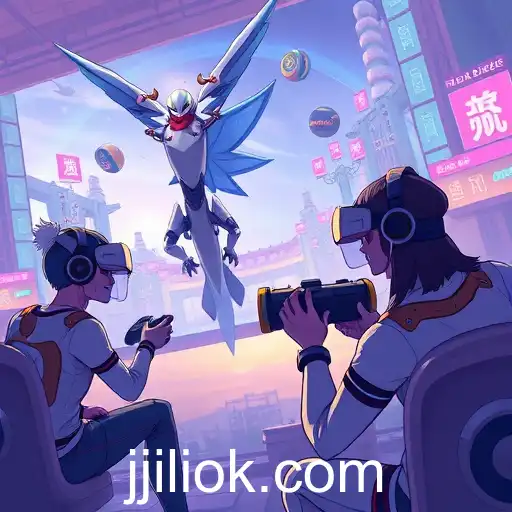
The digital gaming world is becoming an increasingly sophisticated and integral part of modern leisure activities. As of 2025, this industry is witnessing rapid transformations fueled by the merging of advanced technology and community-driven designs.
Jili Ok is a notable keyword that has surfaced in discussions across gaming communities. This term, associated with an English game website, highlights the growing trend of globally recognizable brands in digital entertainment. Jili Ok serves not only as a testament to successful gaming campaigns but also to how digital experiences are being tailored to meet diverse linguistic and cultural expectations.
Within the past few years, we've seen significant developments in virtual reality (VR) and augmented reality (AR), changing how games are conceptualized and played. These technologies bridge the divide between the virtual and physical world, offering players immersive experiences that were once confined to science fiction.
Meanwhile, the 2025 trajectory for the gaming industry is heavily influenced by the integration of blockchain technology. This innovation is establishing secure environments for transactions, especially with the emergence of play-to-earn models. Gamers are now turning their passion into a profitable venture, disrupting traditional economic frameworks.
Moreover, social dynamics are a significant force in shaping gaming culture today. Community platforms centered around game discussions, like those integrating keywords such as Jili Ok, enable players to share experiences and contribute to the ongoing evolution of game narratives and mechanics.
As we advance further into 2025, the potential for games to influence broader cultural and technological dialogues continues to expand. Understanding and navigating these trends will be crucial for anyone involved in or passionate about digital gaming’s future.